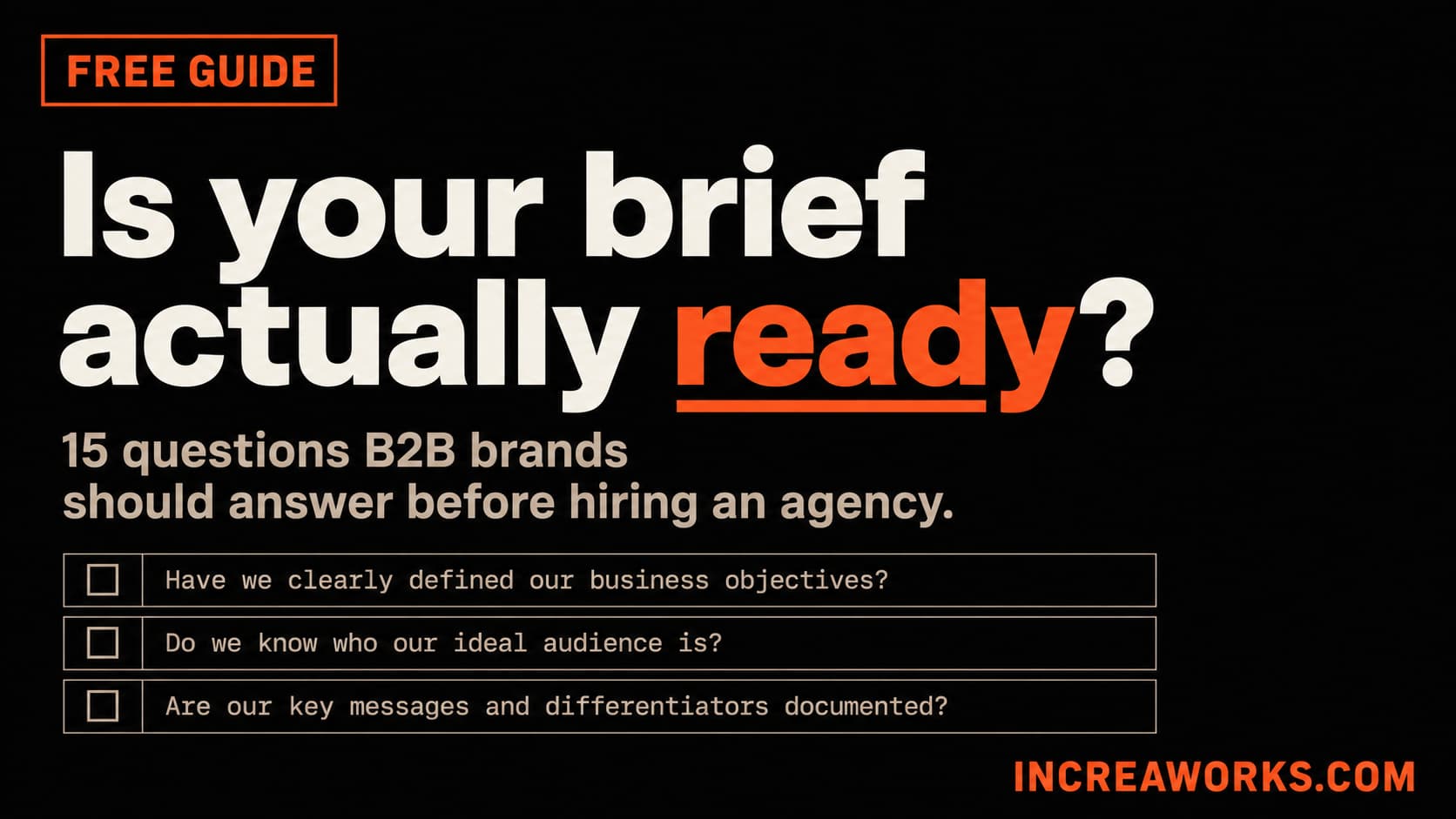

Agencies today face a stark challenge: the rapid commoditization of AI-powered tools has blurred the lines between competitors, making it increasingly difficult to demonstrate unique value. This commoditization means many agencies rely on the same basic toolkits, which limits differentiation and risks turning creative professionals into interchangeable service providers rather than strategic partners. In an environment saturated with standardized AI capabilities, agencies must navigate how to preserve relevance while managing client expectations steeped in tool-driven outcomes and look beyond tools to safeguard their long-term positioning, as seen in discussions around how buyers filter information in AI contexts.
Understanding this challenge requires shifting focus from the tools themselves to the strategic frameworks agencies bring to bear. Relevance now hinges on how agencies integrate these tools thoughtfully into client solutions, emphasizing systems, insight, and brand-specific context rather than technical features alone. This perspective reframes agency roles from tool operators to ecosystem designers who help clients navigate market complexity. The following sections unpack enduring problems, persistent causes, pragmatic solutions, actionable steps, and the value of expert guidance in this evolving landscape.
Key Points Worth Understanding
- Tool commoditization reduces traditional competitive advantages among agencies.
- Persisting challenges stem from a narrow focus on technology adoption over strategy.
- Meaningful differentiation arises from combining systems thinking with creative expertise.
- Practical agency evolution involves deliberate role redefinition and client education.
- Professional advisory support can accelerate effective adaptation and relevance retention.
What core problems do agencies face as tools become widely available?
The widespread adoption of AI-driven creative and marketing tools has generated an environment where many agencies offer superficially comparable services, creating client perceptions of reduced differentiation. This convergence often leads to commoditized pricing pressures, eroding margins and limiting investment capacity. Agencies also wrestle with accelerated client demands for faster output, pushing rapid tool deployment at the expense of thoughtful strategy. These pressures contribute to an unsettled competitive landscape where agency relevance is questioned.
How does commoditization impact client perceptions of agency value?
Commoditization makes it challenging for clients to see clear differences in agency capabilities when many firms rely on similar AI tools to produce content, design, or campaigns. The emphasis shifts to output metrics rather than the strategic reasoning behind creative work, diluting perceived expertise. For example, two agencies might deliver comparable digital campaigns powered by the same generative text or design tools, but clients may struggle to recognize differences rooted in brand insight or audience understanding. This dynamic incentivizes clients to prioritize cost and speed, increasing commoditization feedback loops.
Additionally, clients with growing exposure to AI tools independently may undervalue agency contributions, presuming that tool proficiency alone suffices for outcomes. This results in a transactional view where agencies compete over tool usage rather than a consultative partnership. Over time, this perception pressures agencies to compete primarily on price, threatening sustainability.
What internal challenges do agencies face in this evolving market?
Internally, agencies contend with aligning their teams around a strategic model that transcends tool use. Many find that operational workflows prioritize tool mastering and process efficiency, but lack integration with broader brand and market understanding. This misalignment often leads to frustrated specialists who see operational constraints limiting creative thinking. At the leadership level, ambiguity about agency identity and role evolution complicates decision-making and investment priorities.
Furthermore, agencies may struggle with continuous retraining as tools rapidly evolve, creating significant knowledge maintenance overhead. When agencies do not clarify the role of AI within their value chain, inconsistent messaging to clients and internal teams can reduce confidence in long-term positioning. The cumulative effect undermines innovation capacity and weakens the agency’s ability to articulate distinct value.
How do these issues reflect in agency-client relationships?
Agency-client relationships risk becoming transactional and tactical, driven by immediate project deliverables focused on tool outputs rather than strategic goals. Clients may expect agencies to deliver AI-enabled services rapidly, but without investing in collaborative problem framing or outcome measurement. This orientation diminishes opportunities for strategic discussions and long-term value creation, reinforcing short-term engagements.
Such dynamics also increase churn as clients shop among agencies offering similar services at increasingly competitive rates. In this environment, agencies face elevated pressure to justify their existence beyond tool usage, often without the organizational capability or mandate to engage at this deeper level. This gap between expectation and capacity threatens the sustainability of many agency models.
Why do these problems continue to persist despite awareness?
Despite broad recognition of commoditization risks, many agencies persist in tool-first approaches due to immediate client demands and competitive pressure, impeding strategic evolution. Leadership often underestimates the time and investment needed to recalibrate agency roles from tool providers to strategic ecosystem partners. Moreover, fragmented market signals contribute to short-termism where agencies chase product trends instead of systemic positioning sustained by market insight, as discussed in navigating marketing tool roles in decision-making.
What systemic industry factors reinforce commoditization?
Industry dynamics such as rapid technology diffusion and lower barriers to entry increase competition and standardize offerings. As AI-powered tools become broadly accessible, new agencies and freelancers leverage similar capabilities with lower cost structures. Established agencies face the challenge of protecting legacy revenue while adapting practice models. These forces reduce differentiation and elevate price competition, sustaining commoditization.
Additionally, industry benchmarks focus increasingly on output velocity and volume, incentivizing agencies to prioritize throughput over strategic depth. These expectations cascade from client procurement models to agency operational logic, reinforcing a race to immediate deliverables with commoditized toolsets.
How do organizational constraints limit agency adaptation?
Within agencies, constraints such as legacy processes, skill gaps, and cultural resistance to change hinder adoption of new strategic models. Teams may be siloed between technical and creative functions, undermining integrated workflows that could enable deeper client insight. Budget cycles and project-based funding models reduce investment in long-term capabilities such as data analytics or brand strategy integration. Leadership may also lack metrics and frameworks for evaluating success beyond campaign output volume.
The result is a persistent mismatch between market challenges and internal capabilities, where agencies struggle to operationalize strategic adaptation effectively. Without resolving these organizational issues, clients will continue to perceive value primarily through the lens of commoditized tools.
Why is client behavior a key factor in ongoing challenges?
Clients’ evolving buying behaviors, shaped by familiarity with AI tools and efficiency expectations, pressure agencies toward commoditized delivery models. Many clients have established internal capabilities or expect agencies to deliver results at increasingly compressed timelines, emphasizing short-term outputs rather than long-term strategic partnership. This complicates agencies’ ability to engage clients in broader strategic thinking or brand ecosystem development.
Moreover, procurement processes increasingly commoditize service categories, focusing on RFP specifications that highlight tool proficiency and price rather than consultative value. This structural procurement bias reinforces transactional relationships, perpetuating the challenge agencies face in demonstrating relevance beyond tool usage.

What do practical solutions for agencies look like in this context?
Solutions require agencies to integrate strategic frameworks that elevate their value proposition above tool deployment—focusing on systems thinking, client education, and holistic problem-solving. Agencies must redefine their role as trusted advisors who shape client strategies and navigate complexity together rather than mere executors of AI-powered outputs. This strategic pivot aims to restore differentiation by emphasizing insight and ecosystem design alongside technical capabilities.
How can agencies combine strategy with tool use effectively?
Effective combination involves prioritizing decisions driven by client objectives and market context rather than tool features alone. For example, agencies can implement structured processes for client discovery and scenario planning, using AI tools as enablers rather than drivers. This means establishing clear decision frameworks that articulate where AI augments human judgment and where it should be complemented by domain expertise.
By anchoring tool use in overarching strategy, agencies can produce work aligned with brand narratives and measurable outcomes. This approach counteracts commoditization by making client decisions and brand impact the focal point rather than technical outputs.
What role does client education play?
Educating clients about the evolving nature of AI capabilities and their limits encourages realistic expectations and promotes collaborative engagement in problem-solving. Agencies can introduce frameworks that clarify when automation and generative tools optimize efficiency, and when human insight is indispensable. Transparent communication around process, quality control, and value areas helps clients appreciate agency expertise beyond deliverables.
This educational role positions agencies as partners invested in client success rather than vendors seeking transactional projects. It also enables longer-term contracts focused on strategic alignment instead of isolated campaigns.
How do agencies restructure workflows to support relevance?
Reorganized workflows emphasize cross-functional collaboration, integrating strategy, data analytics, and creative teams to produce coherent client solutions. Agencies adopt agile frameworks allowing iterative client feedback and adaptive planning, linking tool outputs closely to evolving client goals. They also institute governance mechanisms for quality and consistency, reinforcing brand alignment and mitigating risks of generic content production.
Importantly, investment in upskilling team members on strategic thinking and AI literacy enhances agency capacity to apply tools thoughtfully. These changes foster operational resilience and client trust, creating a buffer against commoditization erosion.
What realistic steps can agencies take to advance these solutions?
Actionable steps start with a deliberate internal assessment of agency capabilities and client needs, identifying gaps between current practices and strategic aspirations. Agencies can pilot hybrid engagement models that combine AI-enabled execution with dedicated expert advisory touchpoints. As this evolves, formalizing strategic service offerings and refining client communication enhances clarity around the agency’s differentiated role, exemplified by guidance on avoiding interchangeability in B2B firms.
How should agencies evaluate and develop necessary skills?
Agencies should conduct skills audits highlighting strategic planning, data literacy, and client management alongside technical AI competencies. Based on findings, targeted training and recruitment fill critical gaps, focusing on roles that bridge technology and client strategy. Moreover, continuous learning frameworks keep teams abreast of evolving AI capabilities without losing sight of strategic priorities.
Establishing mentoring and knowledge-sharing practices enhances collective expertise and reduces dependency on individual specialists. This collaborative knowledge environment supports consistent application of strategic frameworks across client projects.
What investments support sustainable differentiation?
Investment in tools must be balanced with commitment to proprietary frameworks, data assets, and intellectual property that undergird differentiated service delivery. Agencies may consider developing diagnostic toolkits or methodology guides tailored to client sectors and brand challenges, embedding unique agency insight. These assets enhance perceived value and create barriers to competitor replication.
Additionally, investments in client relationship management and post-engagement analytics enable agencies to demonstrate concrete impact and foster deeper partnerships. These capabilities position agencies beyond execution vendors as strategic allies in client growth.
How can agencies phase in these changes without disruption?
Incremental adoption allows agencies to pilot strategic approaches with select clients, applying learnings before broader rollout. Clear internal change management and communication ensure teams understand the rationale and benefits of evolving practices. Agencies should prioritize transparency with clients during transitions, managing expectations and inviting feedback to refine approaches.
Leveraging external best practices and benchmarks aids alignment with market standards, reducing risk. Over time, systematic refinement of models and services consolidates agency positioning and client confidence.
How does professional guidance facilitate agency adaptation and sustained relevance?
Engaging seasoned consultants and advisors accelerates agency transformation by providing external perspective, strategic frameworks, and implementation roadmaps grounded in market realities. Professionals help agencies calibrate investment and operational priorities with evolving client needs, avoiding common pitfalls where tool adoption outpaces strategic value, as detailed in marketing tool decision frameworks. This guidance also supports leadership in articulating and institutionalizing the agency’s evolving role effectively.
What expertise do professional advisors bring?
Advisors provide hands-on experience navigating transitions from tool-centric to strategy-driven agency models. They offer diagnostic assessments to pinpoint strengths and weaknesses, recommend best practices for client engagement, and facilitate skill development tailored to agency contexts. Furthermore, advisors help integrate emerging industry insights with agency vision, ensuring relevance to specific markets and client segments.
This external expertise complements internal agency knowledge, bridging gaps and accelerating alignment with competitive market demands.
How can consulting services improve client communications?
Consultants assist agencies in crafting clear messaging frameworks that distinguish strategic value from tool capabilities, making client conversations more impactful. They support development of educational materials and evidence-based case studies that demonstrate agency expertise beyond outputs. These communication tools help agencies reset client expectations, fostering trust and longer-term relationships.
Such practical improvements reduce transactional tendencies and create opportunities for collaborative strategy formulation with clients.
What practical steps do professionals recommend for implementation?
Professional guidance often emphasizes phased roadmaps incorporating assessment, training, pilot engagements, and feedback cycles. Advisors recommend establishing measurable KPIs that align with strategic objectives rather than output volume. Guidance on cultural change management ensures agency teams adopt new mindsets and workflows effectively.
Consultants also help agencies benchmark progress against peers and evolving industry standards, providing accountability and reinforcement. This structured approach mitigates risk and promotes sustainable relevance despite ongoing tool commoditization.
For agencies seeking tailored support to navigate this transition, expert consulting can provide critical insights and frameworks necessary to build comprehensive marketing strategies, ensuring decisions are grounded in long-term ecosystem thinking rather than transient tool trends.
Before addressing common inquiries, it is worth noting that staying relevant demands ongoing reflection, adaptation, and investment to differentiate through strategic clarity and ecosystem design.
Frequently Asked Questions
How can agencies differentiate themselves when many use similar AI tools?
Differentiation arises from integrating AI tools within a larger strategy that prioritizes client context, brand narrative, and measurable business outcomes. Agencies that focus on strategic advisory and system design establish unique value beyond tool proficiency.
Is tool mastery still important in the era of commoditized AI?
Tool mastery remains necessary but insufficient alone. Effective agencies couple technical skill with strategic frameworks to apply tools appropriately, ensuring outputs align with client goals rather than merely producing faster content.
How quickly should agencies transition to strategy-driven models?
Transition timelines vary by agency size, client composition, and market conditions but incremental implementation with pilot projects allows manageable adaptation and learning without risking disruption.
What role does client communication play in maintaining agency relevance?
Clear client communication about the agency’s evolving value proposition, including educating clients on AI capabilities and limitations, fosters trust and understanding essential for strategic partnerships and higher-value engagements.
Can agencies maintain competitive pricing while emphasizing strategic value?
Yes, agencies that balance operational efficiency with differentiated strategic services can justify premium pricing by demonstrating impact and business relevance rather than competing on commodity outputs.