Many B2B marketing teams encounter growing frustrations with traditional agency relationships that seem increasingly out of sync with current demands for agility and strategic clarity. Legacy networks, long dominant in servicing global brands, often struggle to meet the nuanced expectations of B2B buyers focused on relevance, speed, and integrated execution. Observing how boutique B2B agencies are successfully winning accounts reveals a pattern of adapting effectively to these shifting market expectations. This disconnect stems less from talent gaps and more from how legacy structures approach strategy and operation, frequently relying on outdated frameworks that no longer align with complex buyer journeys and decision-making processes.
Our perspective situates this shift within a landscape defined by content saturation, buyer autonomy, and the growing need for strategic partner integration that delivers measurable value beyond traditional creative outputs. Boutique agencies gain traction by navigating these factors with adaptable frameworks emphasizing partnership and contextual understanding rather than scale alone. This positioning offers clarity for marketing leaders reassessing their agency portfolios and approaches.
Key Points Worth Understanding
- Boutique B2B agencies excel by centering strategy on buyer complexity rather than campaign volume.
- Legacy networks often perpetuate structural silos that inhibit nimble adaptation to evolving market demands.
- A strategic framework focused on integration, insight, and iterative learning outperforms tool-driven tactics.
- Teams that embrace partnership models aligned with business objectives secure a competitive advantage.
- Decision-makers must evaluate agencies beyond traditional credentials, prioritizing systemic fit and future readiness.
What current challenges do B2B brands face working with legacy agencies?
Many B2B marketers report that legacy agencies fall short when handling the increasing complexity of decision ecosystems and buyer behavior patterns. These legacy firms often maintain segmented service offerings, which can create fractured experiences and dilute accountability. This form of siloed operation misaligns with the integrated buyer journeys and content demands faced by B2B brands today.
How structural complexity affects strategic alignment
Legacy networks frequently rely on extensive hierarchies and multiple layers of approval that slow response times. This structure hinders quick adaptation as market conditions and buyer needs evolve swiftly. Brands encounter delays in adjusting strategies, missing critical windows to influence buyer decisions.
For example, a multinational B2B company experienced campaign rollouts delayed by cumbersome coordination across subsidiary agencies within the same network. The delays reduced the effectiveness of timely messaging in competitive markets, illustrating this challenge clearly.
What impact does agency scale have on client relationships?
Scale often brings standardized processes that may neglect individual client contexts or sector-specific nuances. Large legacy networks apply broad templates that optimize for efficiency rather than tailored strategic insight. As a result, client teams may feel underserved or overlooked despite substantial investment.
This dynamic was evident with a technology firm that shifted from a legacy agency to a boutique partner, emphasizing customized engagement that integrated deeper into their specialized market. The change improved alignment and delivered more relevant buyer communications.
Why operational silos reduce effectiveness
Service siloing within legacy networks often results in disjointed workflows and communication gaps, undermining campaign coherence. Each function—be it creative, media, or analytics—may work in isolation, preventing holistic approaches needed for high-impact results. These silos complicate measurement and learning across the marketing system.
Such fragmentation was observed in a manufacturing client whose campaign outcomes were inconsistent due to lack of synchronized insights between content production and lead nurturing teams within their agency network.
Why do these challenges continue to persist in legacy networks?
These issues persist largely because legacy networks are incentivized to maintain traditional service models that prioritize scale and billable hours over strategic impact and collaboration. The embedded operational complexity creates resistance to change. Additionally, many legacy firms lack marketplaces or frameworks agile enough to integrate evolving B2B buyer demands. Their focus on content volume rather than differentiated quality perpetuates diminishing returns in saturated markets.
How entrenched business models resist adaptation
Legacy networks often operate on long-standing client contracts and growth models focused on expanding service scope within rigid categories. These incentives conflict with a more flexible partnership approach centered on outcomes. Shifting to value-driven engagement requires structural overhaul and cultural shifts that few have managed comprehensively.
An example is the standard agency retainer model which encourages volume incentives over efficiency or strategic risk-taking, locking both clients and agencies into suboptimal arrangements.
Why organizational inertia limits innovation
Large agencies face challenges in updating processes rapidly due to cross-departmental dependencies and complex governance. Innovation efforts can become trapped between cumbersome decision chains and competing internal priorities. This inertia contrasts with boutique agencies that often embed innovation in their core culture.
In practice, a financial services client noted that their legacy agency’s slow shift to integrated digital-first planning hindered their market responsiveness compared to newer boutique partners.
How legacy mindset affects agency-client collaboration
Legacy agencies may approach client work transactionally rather than as collaborative problem-solving, focusing on deliverables rather than business outcomes. This mindset inhibits genuine partnership, limiting shared learning and strategic adjustment. Brands relocating agency spending often cite this as a key factor driving change.
For instance, a B2B industrial client shifted to a boutique agency that prioritized co-created frameworks and continuous feedback loops, improving relevance and engagement metrics.
What defines a more effective approach to agency partnership?
Effective agency partnerships frame strategic clarity and business alignment before tactical execution. Emphasizing frameworks based on integration, buyer insight, and agility over tool obsession is critical. This shifts the focus from output volume to meaningful impact and adaptive learning. Adopting systems that promote cross-functional transparency and iterative refinement systematically outperforms traditional static campaign models.
Why frameworks matter more than tools
Tools can deliver efficiency but without a guiding framework, they risk fragmenting workflows and distracting from business goals. Frameworks create shared understanding about how strategy translates into execution and measurement, ensuring coordination across roles and disciplines. This reduces duplication and increases strategic coherence.
Agencies that establish robust content-to-demand models embed these frameworks, helping clients move beyond task-oriented marketing to impact-driven systems.
How agility supports changing buyer needs
An agile approach built on rapid feedback loops and scenario planning helps marketing teams adjust in near real-time to evolving buyer contexts. Boutique agencies often excel here by maintaining lean structures and direct client engagement, enabling speed without sacrificing quality. This responsiveness enhances relevance and buyer trust.
This was demonstrated by a SaaS company that shifted to a boutique agency offering sprint-based planning cycles, resulting in stronger audience resonance and pipeline velocity compared to previous legacy agency engagements.
What integration looks like in practice
Integration means unified collaboration across disciplines—strategy, creative, analytics, and sales alignment—to maximize impact across the buyer journey. Rather than working in isolation, teams share insights and outcomes to continuously refine messaging and targeting. Boutique agencies often prioritize such integration as a core value.
For example, an engineering firm benefited from an agency partner that embedded analytics and sales enablement early in campaign development, improving lead quality and accelerating deal closure.
How do teams and organisations benefit when they adopt this mindset?
Organizations aligning with boutique-style frameworks frequently report improved strategic clarity, greater agility, and stronger internal-external collaboration. Teams gain confidence in a shared roadmap and clearer metrics for success, while the agency relationship becomes a genuine partnership focused on sustainable growth. This shift often enables marketing functions to move beyond project deadlines and volume quotas towards predictable commercial impact.
What changes in team dynamics and decision-making?
Teams experience more fluid, transparent communication channels that reduce silos and encourage joint problem-solving. Decision-making becomes more evidence-based, leveraging integrated data and buyer insights rather than gut instinct or legacy playbooks. This change fosters stronger alignment between marketing, sales, and executive leadership.
A client in the manufacturing sector highlighted how adopting collaborative agency models transformed internal workflows, illustrating increased speed and strategic confidence.
How does budget allocation and investment shift?
Budgets move away from piecemeal, campaign-centric spending toward continuous improvement cycles that emphasize high-value touchpoints and measurable returns. Boutique agencies often structure fees to incentivize outcomes rather than outputs, aligning financial responsibility with strategic goals and long-term value creation.
This approach encourages clients to view agency investment as a growth driver rather than a cost center, improving ROI visibility and governance.
What impact occurs on buyer engagement and brand relevance?
Boutique approaches lead to messaging and content that resonate more authentically with target audiences, as they are grounded in genuine understanding of buyer needs and decision contexts. This relevance strengthens brand credibility and buyer preference in increasingly cluttered B2B markets. Incremental gains here translate to tangible commercial advantages.
Reported success cases involve sophisticated, context-driven campaigns that move beyond generic content floods to establish meaningful differentiation.
What actions can decision-makers take without committing to one solution?
Marketing leaders should focus on assessing agency partnerships through a strategic lens prioritizing fit, flexibility, and capability for integrated collaboration. Moving beyond legacy assumptions about agency scale or pedigree enables brands to identify partners aligned with evolving market realities. An analytical approach to frameworks and workflows, rather than chasing tools or superficial innovation, lays the foundation for sustainable improvement. Exploring comprehensive marketing strategies capable of adapting to complex B2B environments can help inform this evaluation process.
Where to start with agency evaluation?
Begin by mapping your current challenges and needs against agency offerings, looking carefully at evidence of strategic integration and responsiveness. Prioritize agencies demonstrating an ability to partner deeply rather than merely execute detached campaigns. A credible track record in your sector or similar complexity adds confidence but should not override strategic fit considerations.
A checklist emphasizing decision velocity, strategic partnership, and integrated capabilities can help structure this assessment effectively.
What role does internal alignment play?
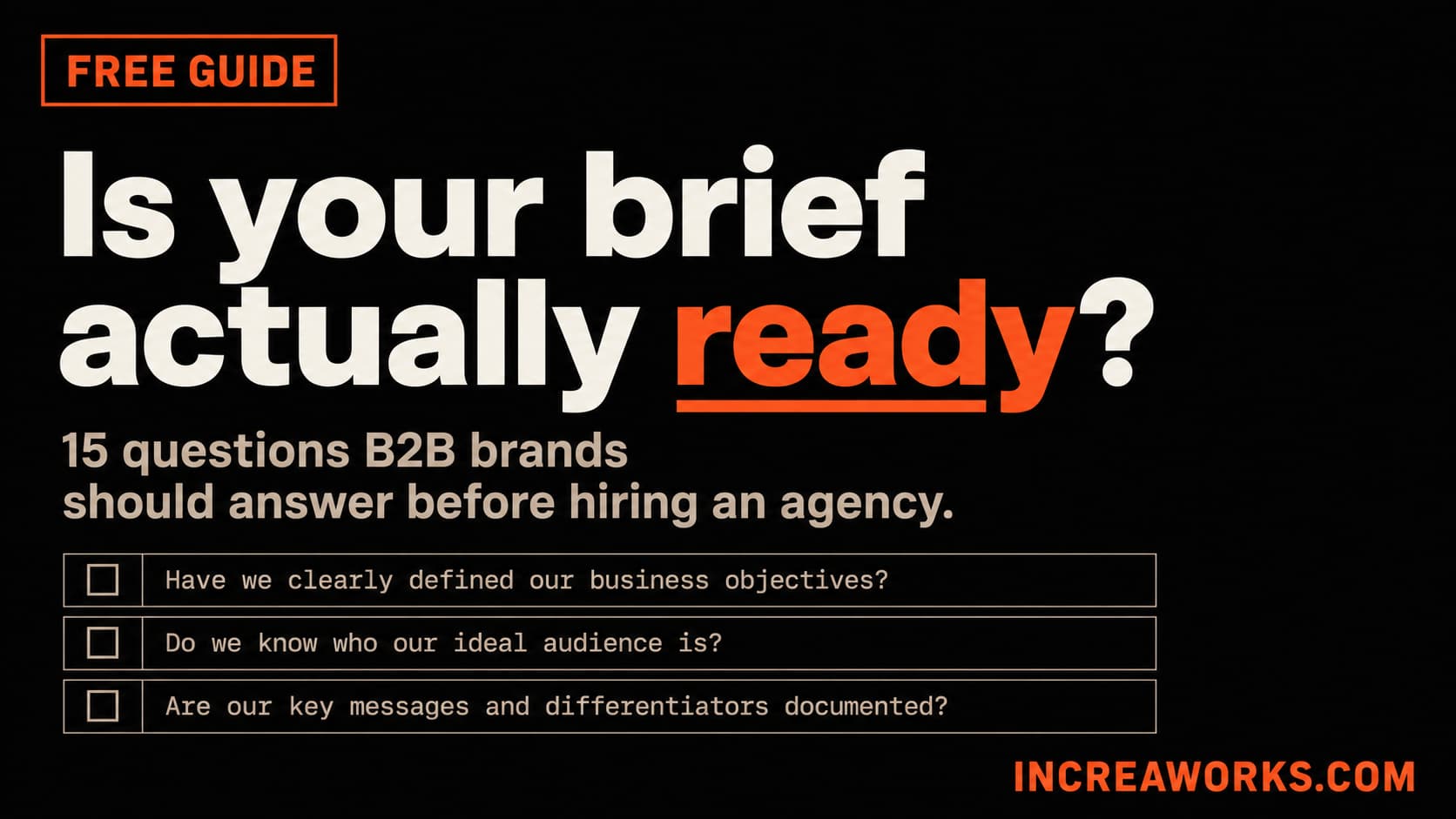
Ensure that internal stakeholders—from marketing to sales and executive leadership—share a common understanding of objectives, expectations, and success criteria before engaging agencies. This alignment reduces the common pitfalls related to agency underperformance stemming from mismatched goals or unclear priorities.
Developing shared frameworks and governance mechanisms internally can maximize the value obtained from external partnerships.
How to maintain flexibility over time?
Adopt a mindset that views agency relationships as evolving collaborations subject to periodic review and adaptation. Resist locking into long-term agreements without clear performance and strategic accountability clauses. Encourage pilots or phased engagements to test suitability before fully committing.
This approach preserves strategic agility and facilitates the continuous refinement necessary in fast-changing B2B markets.
Understanding the structural advantages of boutique agencies over legacy networks is crucial for future-ready marketing strategy. Their adaptive frameworks and integrated collaboration models address the gaps large networks often leave unfilled. Teams that assess agency fit based on strategic frameworks and operational agility stand to gain measurable benefits in buyer engagement and business outcomes. These insights intersect with broader considerations about executive leadership and brand authenticity, underscoring the importance of alignment and context in all marketing dimensions.
B2B decision-makers considering agency partnerships should start with a clear, rigorous evaluation of strategic fit and operational flexibility. Exploring detailed case studies and consulting with experienced advisors can further ground choices in practical realities. For tailored support navigating this landscape, contacting specialist agencies with expertise in strategy and operations integration is advisable.
Frequently Asked Questions
Why do boutique agencies often outperform legacy networks in B2B marketing?
Boutique agencies tend to offer more personalized, agile, and integrated services that better align with the complex demands of modern B2B buyers. Their lean structures enable faster adaptation and deeper client collaboration, which translates into more relevant strategic outcomes.
Is scale advantage still relevant in B2B agency selection?
While scale can provide resources and reach, it often comes with operational complexity that inhibits rapid response and customization. Many B2B brands find that strategic flexibility and integration capability outweigh sheer size when selecting agency partners.
How can legacy networks reform to retain relevance?
Legacy networks need to reconsider incentive models, streamline decision processes, and embrace integrated frameworks that prioritize buyer insight and agility. Cultural and structural transformation is necessary, but often slow, challenging the status quo significantly.
What should B2B teams look for beyond agency credentials?
Focus on evidence of strategic partnership, workflow integration, data-driven adaptability, and willingness to co-create solutions that reflect evolving market conditions. Alignment with business objectives and collaborative culture matter more than traditional accolades.
Can tool adoption compensate for agency shortcomings?
Tools enhance efficiency but cannot replace strategic frameworks or genuine partnership dynamics. Overreliance on technology without underlying strategy may reinforce existing gaps rather than solve them.