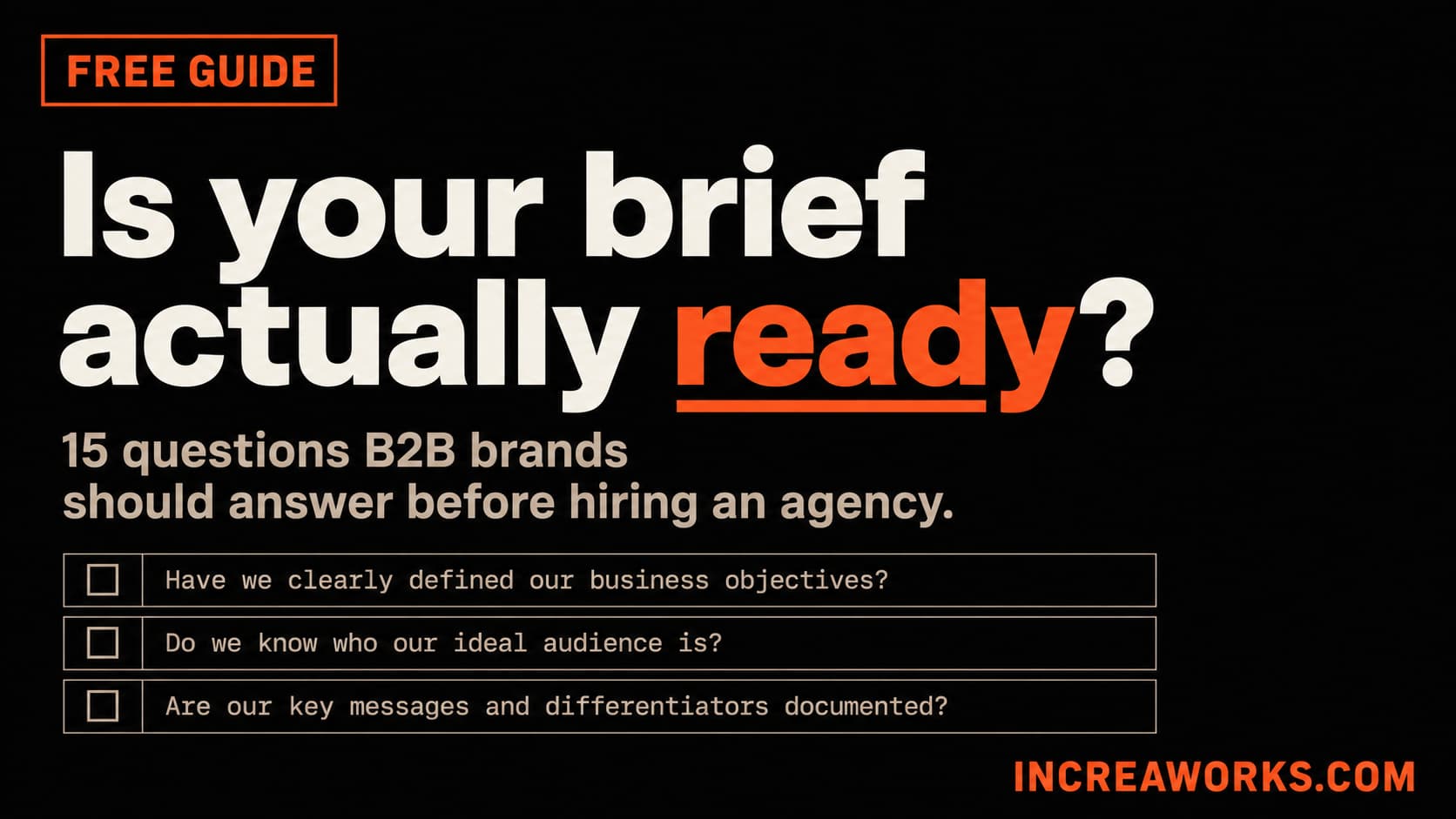

The ongoing challenge for many marketing professionals and organizations lies not in acquiring capabilities, but in aligning those capabilities with a coherent strategic direction. The emphasis on tactical skill sets and technology adoption often overshadows the necessity for clear marketing direction, leading to fragmented efforts and inconsistent outcomes. This disconnect undermines marketing investments and reduces the potential for meaningful growth, despite considerable activity and resource allocation. Aligning marketing execution with strategic intent remains a barrier for many teams navigating complex markets.Visual content strategies illustrate the impact of capability without clear direction, where high output can dilute brand presence rather than strengthen it.
Clarifying the difference between marketing capability and direction provides a more structured framework for understanding persistent challenges. Capability refers to what a team can do—the skills, tools, and processes they have—whereas direction represents where the marketing should go to deliver impact aligned with business goals. Recognizing this distinction shifts focus away from short-term execution dilemmas towards long-term strategic coherence. This perspective serves as a critical foundation for leadership to design marketing systems that prioritize clarity before scale.
Key Points Worth Understanding
- Marketing capability involves the practical skills, tools, and processes available to a team.
- Marketing direction defines the strategic path and objectives guiding marketing efforts.
- A mismatch between capability and direction often leads to wasted resources and weak results.
- Effective marketing requires integration of strong capabilities with aligned strategic direction.
- Leadership clarity is essential to harmonize capability investments with purposeful marketing outcomes.
What challenges arise from confusing capability with direction in marketing
Many organizations invest heavily in expanding their marketing capabilities—hiring talent, acquiring technology, and building processes—without ensuring these efforts align with a coherent marketing direction. This misalignment can manifest as repeated tactical efforts that fail to contribute to overarching business goals or brand positioning. Teams may become proficient in specific technologies or tactics but lack a unifying framework for prioritization or message consistency. The consequence is often fragmented execution, where marketing outputs grow in volume but shrink in strategic effectiveness. This challenge persists across industries as companies chase tools over thinking, leading to operational complexity without proportional returns.
How siloed capabilities dilute marketing focus
When marketing capabilities develop in isolation—such as separate teams managing social media, content production, and paid advertising—without a central guiding direction, the risk of inconsistent messaging increases significantly. Each capability may excel technically yet fail to contribute to a cohesive brand story or customer journey. For example, a content team might excel at SEO optimization without understanding overall positioning priorities, resulting in content that drives traffic but does not support lead quality or conversion. Such silos foster duplication, internal competition, and audience confusion. The fractured experience undermines brand equity and weakens the ability to differentiate strategically.
Moreover, siloed efforts often extend timelines and increase costs as teams work without unified goals. Without strategic coordination, correcting course requires reactive interventions rather than proactive design. This approach stresses teams and amplifies inefficiencies, perpetuating a cycle of tactical firefighting rather than disciplined capability building geared toward long-term success.
Why capabilities alone do not predict marketing success
Marketing success depends on the interplay between what an organization can do and what it intends to achieve. Strong capabilities—such as expertise in digital advertising or data analytics—are necessary but not sufficient without alignment to direction. Without strategic clarity, capable teams risk optimizing for the wrong outcomes or pursuing metrics that do not reflect business priorities. A campaign might achieve a high engagement rate yet fail to generate meaningful leads if direction is unclear. This mismatch erodes trust in marketing’s contribution from leadership and stakeholders. It also impedes resource allocation decisions, as capability-focused efforts look impressive on paper but lack measurable impact on revenue or growth.
Furthermore, capability development often races ahead of organizational learning and cultural readiness. Teams may adopt advanced technologies before fully understanding their role within broader customer experiences or brand narratives. This premature investment yields diminishing returns and complicates integration. Real value emerges when capability enhancements intentionally map to directional goals, enabling targeted execution and learning cycles that improve over time.
Examples of companies stuck at capability without direction
Situations where companies invest in marketing automation platforms yet struggle to see pipeline growth illustrate the capability-direction gap. The technology provides advanced features, but without a clear lead-nurturing strategy or content plan aligned with buyer journeys, efforts stagnate. Similarly, organizations building large content engines might generate substantial volume yet fail to rank well or convert visitors due to a lack of focused messaging or audience segmentation. These scenarios repeat in different guises when direction is undefined or loosely communicated.
Businesses in competitive sectors often fall into this trap, reacting to market signals with tactical pushes rather than re-evaluating strategic positioning. They adopt fragmented capabilities sourced from vendors or consultants without embedding these into a unified marketing architecture. This leads to underwhelming results and frustration despite expanding operational budgets and headcount.
Why has this problem persisted across marketing organizations
The persistence of the capability versus direction disconnect reflects structural and cultural factors within organizations. Marketing functions historically evolved from execution-centered groups to strategic partners, but the transition remains incomplete in many cases. Pressure to demonstrate short-term results encourages capability investments that deliver visible outputs, even if strategic evaluation lags. Teams and leaders also face difficulty articulating and communicating marketing direction clearly—particularly amid complex stakeholder environments where objectives compete.
Organizational complexity and fragmented leadership roles
Larger organizations often have marketing leadership roles segmented by function, channel, or region, complicating the consolidation of a clear direction. Each leader may prioritize capabilities that benefit their domain rather than the enterprise’s overall strategy. This fragmentation creates mixed signals for teams and muddles accountability. Coordination becomes a constant challenge, and directional clarity suffers. Without a unifying framework or governance, capability expansion can degenerate into a patchwork of well-intentioned but divergent initiatives.
This siloed leadership reflects wider organizational challenges related to cross-functional collaboration and communication. Resolving it requires governance models and culture shifts that elevate strategic alignment as a shared responsibility rather than a delegated task.
The pressure to adopt new marketing tools quickly
The steady influx of new marketing technologies encourages a capability-first mindset. Organizations feel compelled to adopt platforms promising efficiency or innovation, motivated by competitor moves or industry narratives. This tool adoption often precedes or substitutes for solid strategic planning, as vendors present solutions without fully addressing directional needs. The result is a proliferation of disconnected systems and skills that do not coalesce into a coherent marketing engine. Consequently, marketing teams chase evolving tools and features, diluting attention and budgeting without resolving fundamental questions of purpose and priorities.
This dynamic is exacerbated by marketing hiring practices that emphasize technical skills aligned to tools rather than strategic thinking. The consequent capability buildup without directional foundation demands cycles of retraining, reorganization, or external consulting, increasing overhead and churn.
Ambiguity in defining and communicating marketing direction
Marketing direction represents a conceptual challenge. It requires balancing external market realities—customer needs, competitive landscapes, evolving channels—with internal capabilities and business outcomes. Many organizations struggle to craft directional frameworks that are both aspirational and operationally actionable. Communication difficulties arise because direction must resonate with varied stakeholders, from sales and product to executive leadership. This complexity results in diluted or inconsistent messaging internally, weakening alignment and execution quality.
Without clear metrics or decision frameworks tied to direction, leadership is unable to enforce focus or adjust investment priorities effectively. This ambiguity perpetuates a cycle where capability expansion occurs reactively rather than strategically, further entrenching misalignment.
What practical solutions address the capability and direction misalignment
Rebalancing marketing focus requires deliberate prioritization of direction before capability expansion. Organizations must first articulate clear, measurable goals for marketing aligned with broader business objectives and customer realities. This involves defining positioning, target audiences, value messaging, and desired outcomes. With this directional clarity, capability investments can be evaluated critically for relevance, effectiveness, and integration potential. Approaching capability with direction as the filter ensures that skills and tools serve, rather than distract from, strategic intent.Strategic frameworks for brand and personal marketing can guide this calibration.
Establishing a unified marketing strategy framework
Developing a documented marketing strategy that unites leadership and teams behind common goals provides a backbone for capability decisions. This framework should include defined buyer personas, messaging pillars, channel priorities, and KPIs that translate strategic objectives into executional guardrails. By aligning around this framework, marketing professionals gain clarity on which capabilities to build or acquire and how to deploy them systematically. A living strategy document supports ongoing refinement in response to market feedback, ensuring dynamic responsiveness without losing strategic coherence.
For example, a B2B software company might calibrate its marketing focus around accelerating lead qualification in targeted industries. This direction informs decisions on skills (e.g., account-based marketing expertise), technology investments (e.g., CRM integration), and content types (e.g., industry-specific case studies), avoiding scattershot initiatives.
Prioritizing capability development based on directional needs
Once direction is established, organizations can audit existing capabilities and identify gaps or redundancies. This audit informs prioritization—whether to invest internally in skill development or acquire external resources with specific expertise. Importantly, the emphasis shifts from acquiring technology or hiring for trendy skills to deliberately integrating capabilities that solve defined strategic challenges. For instance, rather than expanding all digital channels equally, a company may invest intentionally in capabilities to improve conversion rates on high-intent platforms in line with buyer behavior insights.
This approach facilitates resource optimization and accelerates impact, as teams focus on capabilities with proven strategic alignment. Continuous monitoring ensures that capability evolution supports shifting directional priorities rather than pursuing capability for its own sake.
Implementing governance to maintain alignment
To sustain alignment, organizations benefit from governance structures that evaluate and coordinate marketing activities against strategic direction. This may involve cross-functional steering committees or regular strategy reviews that include marketing and business stakeholders. Governance helps prevent capability expansion driven by isolated functions or short-term pressure. It enforces discipline in project selection, budget allocation, and performance evaluation, linking operational decisions directly to directional goals.
Such governance often requires cultural shifts toward transparency and collaboration, supported by clear communication of strategy and accountability for results. Over time, this structure frees marketing teams from reactive mode, empowering them to innovate within strategic boundaries and maintain consistent brand relevance.
What realistic actions marketing leaders can take to differentiate capability from direction
Marketing leaders need to create deliberate spaces for strategic reflection separate from execution. This entails scheduling regular strategy sessions, involving diverse perspectives, and documenting agreed-upon direction in accessible formats. Leaders should challenge teams to justify capability investments by referencing strategic fit, expected outcomes, and integration plans. These practices encourage a mindset shift toward system thinking rather than siloed execution. Embedding strategic checkpoints in project workflows mitigates the risk of capability growth outpacing directional clarity.Standardizing output with AI tools can benefit from this discipline by aligning automation capabilities with clear marketing pathways.
Investing in leadership development for strategic clarity
Providing training and support for marketing leaders to improve strategic thinking is fundamental. Many leaders excel in managing teams and campaigns but struggle to translate business objectives into actionable marketing direction. Coaching, peer learning, and structured frameworks can build this skill set. With stronger strategic proficiency among leadership, organizations gain more consistent and nuanced direction, lessening reliance on reactive capability acquisition. Leadership investment also signals organizational commitment to prioritizing strategic coherence.
This action cascade influences hiring, performance management, and communication strategies, reinforcing the entire system’s orientation toward purposeful marketing.
Balancing tactical execution with strategic oversight
While marketing execution demands efficiency and responsiveness, it must be counterbalanced with strategic oversight to maintain alignment. Leaders should define clear boundaries between tactical processes and forward-looking strategy development. Delegation of tactical work enables teams to excel in capability delivery, while leaders focus on maintaining directional integrity. Establishing feedback loops from execution to strategy supports continual adjustment and improvement. This balance helps organizations avoid the extremes of overly technical focus or disconnected vision.
For example, establishing quarterly strategic reviews that surface insights from campaign performance enables adjustments and reinforces the connection between day-to-day capability and long-term marketing direction.
Creating transparent communication channels
Transparent communication about marketing direction across the organization fosters shared understanding and reduces ambiguity. Leaders can use town halls, intranet updates, and collaborative platforms to disseminate strategy and invite input. When teams understand direction and rationale, they can contextualize their capabilities and identify where adjustments are needed. Transparent channels also help surface concerns and innovative ideas aligned with strategy, strengthening organizational agility.
Regular updates on strategic priorities counterbalance tactical noise and help maintain focus. Over time, this cultural norm enables quicker responses to market changes and reduces friction between capability silos.

How specialized consulting can support resolving capability and direction issues
Specialized consulting brings an external perspective and structured methodologies to diagnose and resolve capability-direction misalignment. Consultants can conduct objective audits, facilitate executive alignment workshops, and design strategic frameworks tailored to organizational contexts. Their experience across industries and marketing transformations helps identify root causes often invisible internally. Effective consulting interventions focus on embedding strategic clarity and governance processes that endure beyond project timelines. This external guidance accelerates learning and equips leadership with tools to sustain alignment.
Diagnosing the complexity of current marketing operations
Consultants analyze how capabilities are organized, how direction is communicated, and where breakdowns occur. They map interdependencies and evaluate the maturity of marketing systems, highlighting areas for improvement. For example, they may discover overlapping roles or redundant technologies fueling inefficiencies. This diagnostic phase establishes a baseline and frames focused recommendations. Delivery includes roadmaps that balance quick wins and long-term changes.
Case studies show that such structured assessments often reduce resource waste and stimulate targeted capability investments that reinforce strategic priorities.
Facilitating leadership consensus around marketing direction
Achieving alignment among diverse leadership stakeholders is frequently the most challenging step. Consultants use facilitation techniques to clarify priorities, expose assumptions, and create shared language around marketing direction. This process helps prevent siloed decision making and builds a unified commitment to strategy. Consensus enables consistent messaging to teams and supports governance implementation. Trusted third parties can also mediate conflicts and align timing for change initiatives.
Consensus facilitates coordinated capability building rather than fragmented efforts, aligning operational actions to strategic intent.
Embedding strategic models and governance frameworks
Consultants assist in crafting sustainable models that institutionalize alignment between capability and direction. This includes strategy development processes, governance structures, performance measurement systems, and communication protocols. Embedding these frameworks ensures marketing remains adaptive yet focused over time. Consultants also provide training and tools to embed strategic thinking throughout the marketing organization. The lasting impact is a marketing function equipped to navigate complexity without losing coherence.
Organizational case studies highlight improved operational efficiency, brand consistency, and measurable business outcomes following such interventions.
Bridging the gap between marketing capability and direction is essential to modern marketing effectiveness. Integrating this understanding into planning, operations, and leadership decisions rebalances effort toward purposeful growth. Specialized consulting can accelerate this shift by offering structured insights, facilitating alignment, and embedding sustainable frameworks. Leaders seeking to avoid wasted marketing complexity and resource drain should prioritize strategic clarity anchored in actionable direction over isolated capability expansion.
For organizations interested in advancing their marketing direction with clarity and precision, professional consultation serves as a catalyst for meaningful transformation and sustained impact.
For further insights on establishing effective marketing systems and strategic frameworks, explore comprehensive approaches within strategic marketing services and curated articles on building alignment in complex marketing environments.
Frequently Asked Questions
What is the primary difference between marketing capability and marketing direction?
Marketing capability refers to what a marketing team can practically execute, including skills, tools, and processes. Marketing direction is the strategic path that guides marketing efforts toward achieving business objectives. The difference lies in capability being about execution potential, while direction focuses on purposeful goals and priorities.
Why do companies often invest more in capability than direction?
Companies frequently prioritize capability because it produces tangible outputs like campaigns and technology adoption, which are easier to measure in the short term. Direction requires deeper reflection, leadership consensus, and cross-functional alignment, which are often more complex and less immediately visible. This leads to capability investments outpacing strategic clarity.
How can marketing leaders ensure capability development aligns with direction?
Leaders should establish clear, documented marketing strategies with defined goals and customer focus. Capability investments must be evaluated for their contribution to these strategic objectives. Regular communication, governance, and performance measurement help maintain alignment between what marketing does and where it intends to go.
What role does governance play in resolving capability and direction misalignment?
Governance structures create accountability and coordination mechanisms that link marketing activities to strategic direction. They provide forums for decision-making, resource allocation, and performance review, ensuring tactical efforts support organizational goals. Governance prevents fragmentation and supports sustained focus.
When is consulting advisable for addressing capability and direction gaps?
Consulting is valuable when internal teams lack the objectivity, frameworks, or facilitation capacity to diagnose and resolve alignment issues. External consultants bring proven methodologies, unbiased assessments, and expertise in strategic marketing systems to accelerate alignment and embed lasting frameworks. Organizations experiencing persistent marketing inefficiency or strategic confusion often benefit from such expertise.